

How Much Is a Driving Crash Course? The Ultimate UK Price Guide and Cost Breakdown
Home » How Much is a Driving Crash Course?
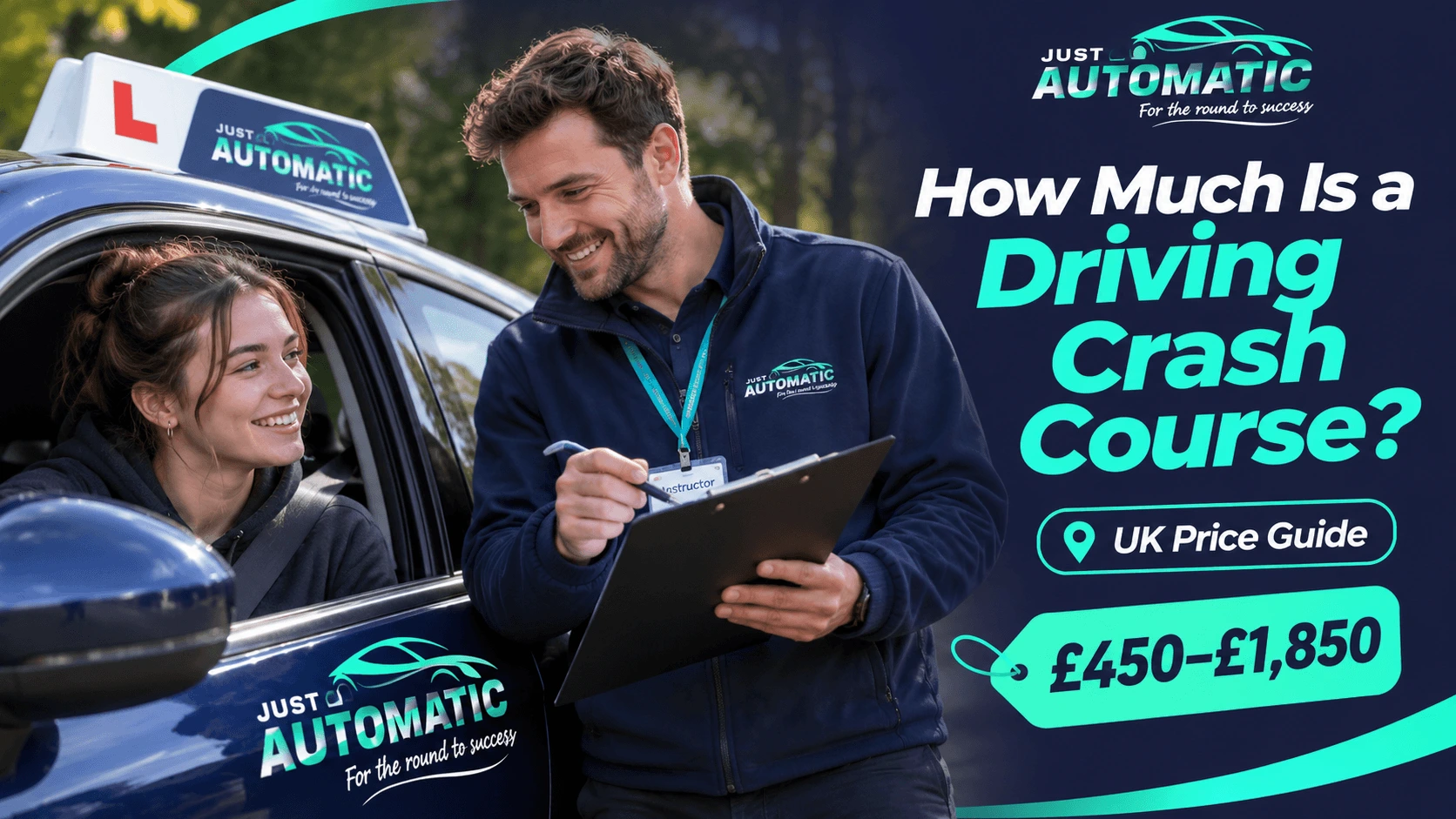


How much is a driving crash course in the UK? The average driving crash course cost UK ranges from £450 for a 10-hour retest booster up to £1,650 for a complete 40-hour beginner package, which includes your official practical test fee . However, hidden car hire surcharges, booking broker traps, and choosing the wrong number of hours can easily cause unsuspecting learners to waste hundreds of pounds. In this comprehensive national price guide, we break down the exact hour-by-hour cost matrix, uncover hidden test day expenses, compare regional pricing variations, and show you how to fast-track your full licence without overpaying for unnecessary lessons.
The question of price is often the start of every learner’s quick-pass journey. The answer is complex because a crash course is an intensive financial commitment designed to save you time.
Understanding the true cost requires looking past the headline advertising figures and analyzing the hourly breakdown.
Crash Course Price Comparison by Course Hours
To calculate your total financial investment accurately, review this UK-wide course pricing matrix based on your existing driving ability:
| Course Package | Total Training Hours | Recommended Driving Experience | Estimated UK Price Range | DVSA Practical Test Included |
| Retest Booster Course | 10 Hours | Recently failed a practical test | £450 – £600 | Yes (£62 standard fee included) |
| Intermediate Crash Course | 15 to 20 Hours | Has 15+ hours of previous lessons | £650 – £950 | Yes (£62 standard fee included) |
| Fast Track Intensive Course | 25 to 30 Hours | Basic car control mastered | £950 – £1,300 | Yes (£62 standard fee included) |
| Complete Beginner Course | 35 to 40 Hours | Zero previous driving experience | £1,350 – £1,650 | Yes (£62 standard fee included) |
| Extended One Week Course | 40 to 45 Hours | Time-critical absolute beginner | £1,500 – £1,850 | Yes plus fast-track test booking |
Analyzing the Upfront Cost and Price Breakdown for Automatic Crash Courses
A crash course is fundamentally a bulk purchase of driving hours, requiring a large upfront investment for concentrated learning.
The Average Financial Outlay for 30 to 45 Hours of Instruction
For a complete novice or near-beginner, the average financial outlay for 30 to 45 hours of instruction sits firmly between £1,000 and £1,650.
Cost Per Hour: Although this upfront payment feels substantial, the equivalent cost per hour in a crash course is often significantly lower than purchasing individual weekly lessons. This is due to bulk lesson discounts and the operational efficiency of concentrated learning.
The Inflation Factor: Due to rising fuel costs, vehicle maintenance, and high instructor demand across the UK, course prices have steadily increased. Securing a quote early protects you against future price hikes.
Uncovering Hidden Mandatory Fees Including Test Costs and Car Hire
When calculating exactly how much is a driving crash course, you must budget for essential fees that are frequently excluded from cheap, headline-grabbing online advertisements:
Practical Test Fee: This is a fixed DVSA fee (currently £62 on weekdays or £75 for weekends and evenings). Many online brokers advertise a cheap course price but add this mandatory fee at checkout.
Car Hire for Test Day: Your driving instructor will charge a fee (typically covering 2.5 to 3 hours of their time) for the use of their dual-controlled vehicle during the actual test, including a pre-test warm-up and travel. This car hire fee usually ranges from £120 to £160.
Retest Charges: If you fail, you must pay for a new test fee (£62) and car hire again, which forms the core of your potential annual retest fees.
Always confirm whether your written quotation is fully all-inclusive. You can review transparent rates on our driving lesson cost breakdown page to ensure complete clarity before committing funds.
How Location and Automatic Transmission Drive Up Final Price
Where you learn and what you drive significantly impact your final invoice:
Regional Variations: Crash courses in major cities like London or central Birmingham are generally more expensive due to higher operating costs, congestion charges, and elevated instructor wages.
The Automatic Premium: Learning in an automatic car typically carries a premium of £1 to £3 per hour over manual lessons because automatic dual-control vehicles cost more to purchase and maintain. However, partnering with a certified automatic driving school in the UK often works out cheaper overall, as automatic learners require fewer total hours to reach test standard.
The Cost Per Pass Metric: Why Quality Courses are the Cheapest Investment
The true value of a crash course is measured by its first-time success rate and overall time savings, making quality instruction a massive financial saver.
Avoiding the Cheapest Course Trap and Identifying Low Quality Instruction
Be extremely wary of the cheapest crash course advertised online. Unusually low prices are a major red flag that often indicate:
PDI Instructors: Your instruction may be delivered by a PDI (Potential Driving Instructor – a trainee holding a pink badge) rather than a fully qualified, experienced Green Badge ADI.
Insufficient Hours: The package may only contain 10 or 15 hours, leaving an absolute beginner woefully unprepared for the exam.
A failed test due to poor, cheap instruction is the most expensive mistake a learner can make, rendering the low-price option a false economy.
Understanding the Fail Tax and How Quality Guarantees Savings
A failed test is your biggest financial risk.
The cost of a new DVSA test, another car hire fee, and 5 to 10 extra remedial lessons to fix your faults is often referred to as the “Fail Tax.”
A high-quality course with an experienced instructor, though carrying a higher initial price tag, maximizes your first-time pass rate. Avoiding just one failed test is the most effective way to guarantee a lower total financial investment.
The Crucial Role of the Assessment Lesson in Preventing Overpayment
The only way to determine your true cost is through a professional assessment lesson.
Never buy a 40-hour package blindly. Book a diagnostic assessment lesson so an instructor can evaluate your natural coordination, spatial awareness, and existing habits. They will then recommend the exact number of hours you need (e.g., 20 hours instead of 40), preventing you from overpaying for unnecessary lessons.
Strategic Packages Matching Course Hours to Your Existing Skill Level
Packages must be tailored precisely to your starting point to guarantee maximum efficiency and cost-effectiveness.
Absolute Beginner Packages: The Realistic Initial Financial Outlay
Beginner packages (35 to 45 hours) are for learners with zero prior driving experience. They require the maximum financial commitment because they must cover the entire DVSA syllabus from scratch, including basic steering, complex roundabouts, and independent navigation. If you are starting from zero, £1,350 to £1,650 is the realistic price you must prepare to pay.
Intermediate Packages: The Most Common Purchase
Intermediate packages (20 to 30 hours) are the most frequently purchased option. They are designed for learners who have had 10 to 15 hours of previous professional instruction or significant private practice. The cost is mid-range, focusing heavily on perfecting manoeuvres and building high-speed confidence. Exploring structured automatic intensive programs ensures this mid-range training is delivered efficiently.
Near Test Ready Packages: Targeted Cost for Fault Fixing
Short, focused courses (10 to 15 hours) are ideal for learners who have recently failed a test, held an overseas licence, or had a test cancelled at the last minute. The cost is lowest, focusing exclusively on fault correction and confidence building on official test routes.
Securing Your Investment: Why All Inclusive Deals are the Best Value
The safest financial choice is booking an all-inclusive package where the total price explicitly covers the instruction hours, the official DVSA driving test fees table charges, and the test-day car hire. This guarantees total financial transparency and is the best way to secure your total investment upfront without nasty surprises on test week. For full transparency on cost and inclusions, explore our fast pass crash course options.
Logistics and Scheduling: Time Commitment and Test Date Security
The Total Time Investment: Hours Per Day vs Total Days Commitment
A standard crash course structure involves driving for 5 to 7 hours per day, running for 5 to 7 consecutive days.
This high intensity maximizes skill retention—meaning you do not forget what you learned yesterday—and minimizes the risk of wasting time re-learning basic controls. However, it requires intense mental stamina. Taking automatic driving lessons around Birmingham allows you to handle long daily hours without the physical fatigue of constant gear shifting.
Securing a Quick Pass: The Critical Hurdle of Short Notice Test Booking
The most valuable component of a crash course package is the guarantee of a short-notice test date.
Currently, standard DVSA test waiting lists can stretch for up to five months. Reputable intensive driving schools use dedicated administrative software to secure cancellation slots. If you manage to find an earlier test appointment yourself on GOV.UK, you can utilize short-notice driving test arrangements to secure dual-control vehicle hire and expert warm-up coaching.
The Mandatory First Step: Passing Your Theory Test
You cannot legally book a DVSA practical driving test slot without a valid Theory Test pass certificate number. According to DVSA theory test booking requirements, passing your theory test before committing to a crash course allows your school to match your intensive practical hours directly with a confirmed test appointment date, ensuring zero gap between your final lesson and your exam.
Next Steps to Finalize Your UK Crash Course Cost
Gaining your driving licence quickly does not have to be a confusing financial minefield. With transparent pricing, experienced local instructors, and modern dual-controlled automatic vehicles, passing your test first time on a set budget is entirely achievable.
Stop guessing “how much is a driving crash course” and get a precise, data-backed quotation based on your exact skill level and location. Contact our team today to request a bespoke quote and secure your fast-track path to driving independence!
- Just Automatic Driving School
- December 21, 2025


Just Automatic Driving School
Just Automatic Driving School UK is the leading automatic driving specialist serving Birmingham and the wider Midlands area. We offer highly structured automatic driving courses and reliable driving lessons Birmingham. From absolute beginner lessons to advanced Intensive Driving Courses, our experienced Birmingham driving instructors ensure you gain the skills needed to pass first time. Choose your trusted Birmingham driving school for excellence in automatic training.
Connect with US



Frequently Asked Questions About Crash Course Costs
Is the cost of a crash course refundable if I am deemed not ready to pass?
This depends entirely on the specific driving school's terms and conditions. Most reputable schools will offer a refund for any unused instruction hours, but the DVSA practical test booking fees and administrative cancellation finder fees are usually strictly non-refundable.
Are crash courses more expensive than booking individual weekly lessons?
In terms of the total financial investment, crash courses are often the same price or even slightly cheaper. The cost per hour is typically lower due to bulk booking discounts. However, the upfront payment is much larger, representing an immediate and significant financial outlay.
What is the absolute cheapest option: a crash course or a pay-monthly package?
The cheapest option overall is usually the crash course, assuming you pass on your first attempt, as the cost per hour is lower and the total number of hours needed is heavily reduced due to peak skill retention. Pay-monthly lessons feel cheaper week-to-week but almost always result in requiring more hours overall.
Does the price of an automatic crash course include motorway training?
Often, yes. Many schools include a short Pass Plus or motorway familiarisation training session in the final hours of the course, especially if the test centre routes involve high-speed dual carriageways. Always confirm this inclusion before booking your specific package.
Why are crash courses in London and the South East more expensive than in the Midlands?
The price difference is primarily driven by significantly higher operating costs in the capital. This includes higher instructor wages, increased fuel costs, congestion and ULEZ charges, and higher commercial insurance rates in densely populated major cities compared to regions like Birmingham or Manchester.
Can I pay for a crash course in monthly installments?
Some of the larger national driving school franchises offer payment plans or third-party finance options (like Klarna or PayL8r). However, many independent local instructors require a deposit upfront to secure the test slot, followed by the full balance clearing a few weeks before the intensive course actually begins.