
Send your postcode & enquiry
Tell us where you want lessons, your preferred course and suitable times.


Learn to drive an automatic car with a structured course tailored to your experience. From your first automatic driving lessons to junctions, roundabouts, parking and practical-test preparation, explore the right lesson plan for you. Just Automatic Driving School supports learner enquiries in Birmingham and surrounding West Midlands areas; availability, prices and pickup are confirmed for your postcode.
Course details and lesson availability are confirmed when you enquire.
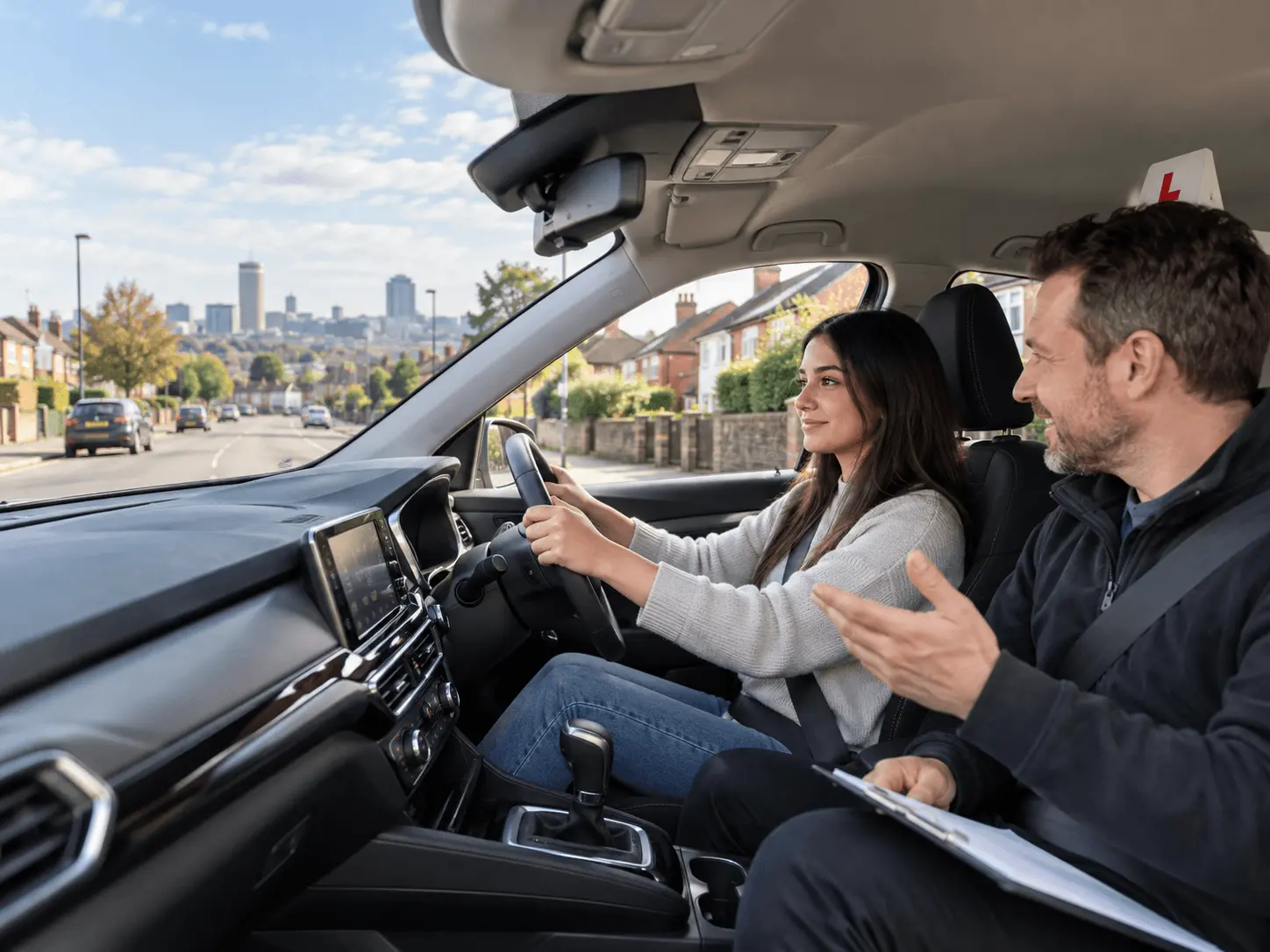
From choosing an automatic driving instructor to preparing for your DVSA practical test, you should know what happens at every stage. Our four-step learning pathway starts with a postcode-based enquiry, moves through a clear lesson plan and progress reviews, and finishes with a realistic assessment of safe independent driving—not a promise that everyone will pass within a set number of hours.
Tell us where you want lessons, your preferred course and suitable times.
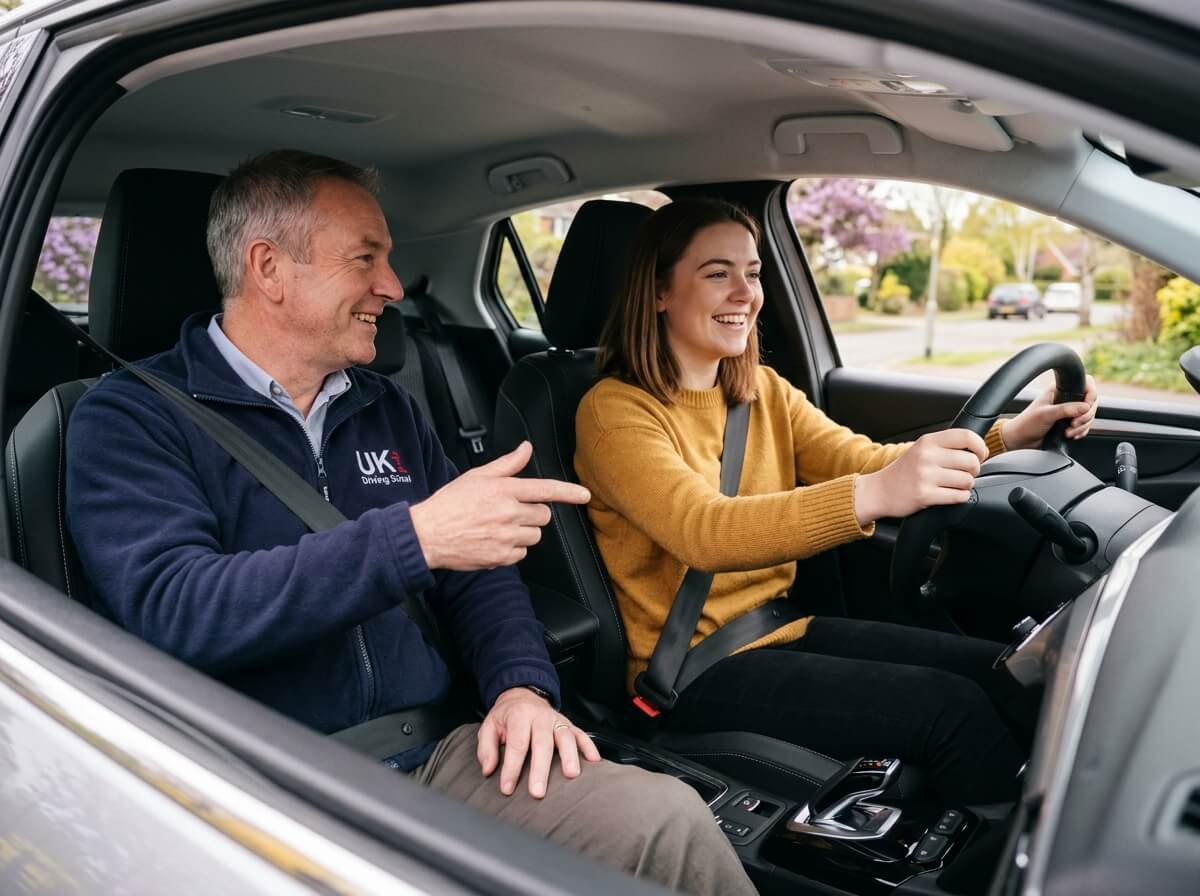
Ask about availability, lesson duration, prices and how your first lesson will be arranged.

Practise progressively with feedback on control, observation, junctions, traffic and manoeuvres.

Work on independent driving, vehicle-safety questions and mock assessments when you are ready.
Tell us whether you prefer weekly tuition or a concentrated schedule and we can discuss the next step.
Whether you are starting from zero, returning after a break or preparing for a practical test, choose the automatic lesson format that suits your skills and timetable. Compare the options below, then ask us to confirm your postcode, instructor availability, lesson length and current rates before you book.
Start with car controls, observation and quiet-road practice before progressing to junctions, roundabouts and more demanding traffic.
Start learning →Build skills at a steady pace around work or study. Ask about suitable lesson lengths and instructor availability.
Enquire about weekly lessons →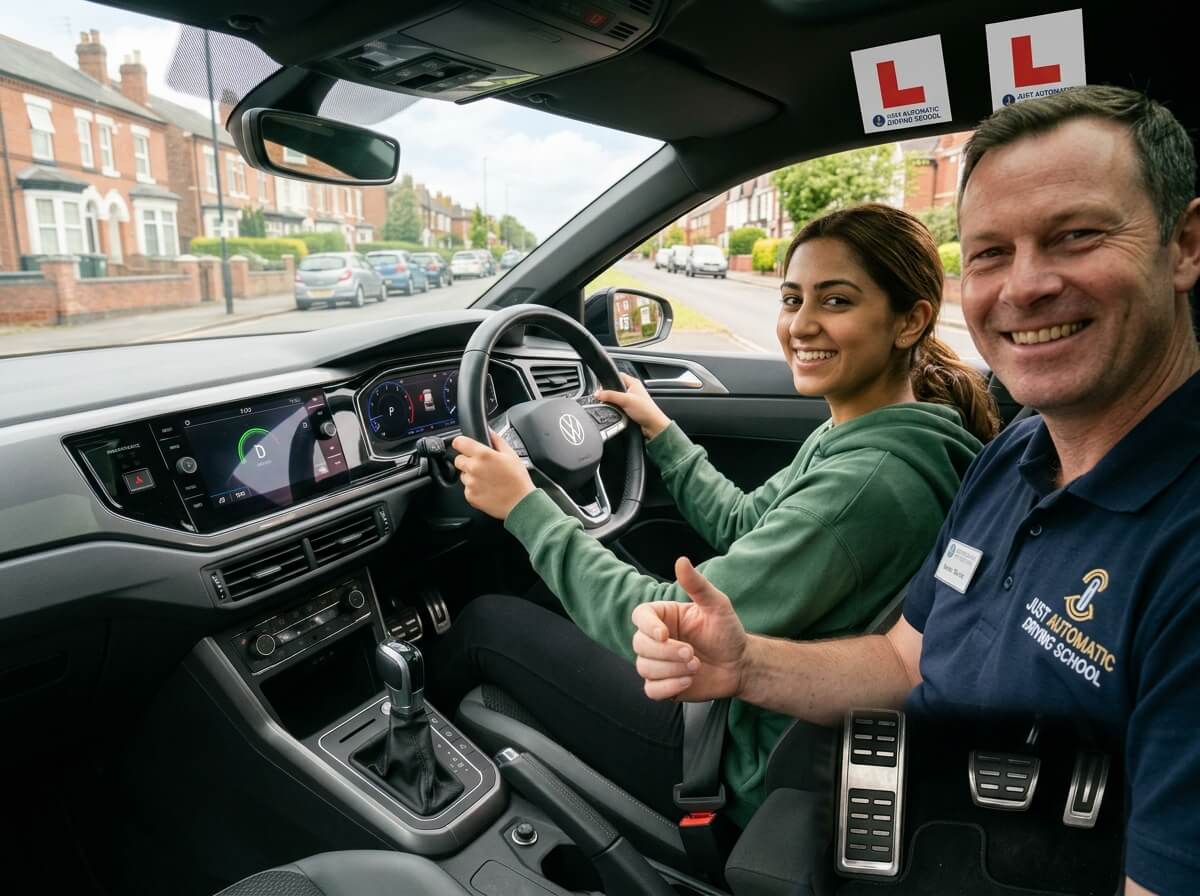
For learners who prefer concentrated tuition. The number of hours and dates should reflect your starting ability and instructor availability.
Explore intensive courses →Already have driving experience? Target specific weaknesses and practical-test readiness through focused tuition.
View crash courses →Regain confidence with road positioning, parking, busy junctions and everyday driving after time away.
See refresher lessons →Prefer a female instructor? Ask about availability for your postcode and preferred lesson times.
Check instructor options →For further options see our complete driving courses overview. Ask for current prices, lesson schedules and package inclusions before booking.
Before choosing an automatic driving course, most learners want to understand how often lessons take place, what they are paying for and whether an option suits a complete beginner. Start with these three booking routes; the actual duration, instructor allocation and charges are confirmed when you enquire.
These are the common practical questions people ask before booking their first automatic driving lesson. Make sure you understand eligibility, what to bring and how lessons are arranged.
For learner driving on public roads, you generally need a valid provisional driving licence. Most people can start learning in a car at age 17; different rules can apply in some circumstances. Confirm your entitlement before booking.
Read the provisional licence guide →You can normally start driving lessons before passing the theory test, but you need the relevant theory-test pass before booking the practical test. Studying the Highway Code alongside lessons is a sensible approach.
Bring your provisional licence, glasses or contact lenses if needed, and suitable footwear. Tell the instructor if you are anxious, have already taken lessons or need reasonable adjustments.
Ask whether one-hour or two-hour automatic lessons are offered, how pickup works in your area, and if evenings or weekends are available. Lesson formats and availability can vary by instructor and postcode.
Tell us your postcode and any previous experience so we can discuss an appropriate starting point.
Your first lesson should feel manageable. The instructor can ask about any previous experience, explain the controls of the car and start with skills that suit your confidence.
An automatic driving course is about more than learning the automatic gear selector. UK learner drivers also need steering control, mirror-signal-manoeuvre routines, speed awareness, pedestrian crossings, complex roundabouts, safe parking, independent driving and the ability to respond to changing traffic. Your instructor should introduce these skills progressively and revisit them where you need extra practice.
Safe use of pedals, selecting gears, starting, stopping and smooth speed control.
Mirrors, blind spots, road position, emerging, meeting traffic and priority.
T-junctions, crossroads, multi-lane roundabouts and following road signs.
Parallel parking, bay parking, pulling up on the right and safe reversing where appropriate.
Speed selection, traffic management, lane discipline and responding to changing road conditions.
Following directions or satellite navigation, show-me/tell-me checks and structured mock-test feedback.
Ask about beginner lessons, lesson frequency and how an instructor can track your progress.
A quality automatic driving course is more than driving around local roads. Your instructor should establish your starting level, explain the lesson objective, model safe observations and decision-making, and give useful feedback. On UK public roads, paid driving instruction must be delivered by a qualified Approved Driving Instructor (ADI) or an authorised trainee.
Ask how your Birmingham automatic driving instructor adapts tuition for nervous beginners, manages dual-control safety, introduces unfamiliar roads and decides when a mock driving test is appropriate. Good teaching means being clear about what you can do confidently—and what still requires practice.
Check the instructor's DVSA status and who will actually deliver lessons.
Agreed goals for controls, junctions, manoeuvres and independent driving.
Progress reviews after lessons and help with recurring faults.
Mock-test feedback and honest advice rather than pass guarantees.
Good automatic driving tuition is personal, measurable and focused on safe independent driving. Here is what to ask for—and how the right instructor should support your progress from the first lesson to test readiness.
Paid driving instructors in Great Britain must be registered as approved driving instructors (ADI) or authorised trainees. You can ask to see the green or pink DVSA windscreen badge, understand who will teach you and discuss their experience with automatic learner drivers.
Begin with a realistic discussion of previous lessons, confidence, goals and typical driving situations. Expect feedback on observations, control, junctions, independent driving and recurring faults—not simply a promise of a quick pass.
Ask about the tuition car, dual controls where fitted, insurance arrangements, pickup area and how the instructor introduces parking, multi-lane roundabouts, urban traffic and difficult conditions.
As skills improve, discuss realistic mock driving tests, show-me/tell-me vehicle safety questions and whether you can drive without verbal prompts. A test date should follow readiness, not an advertised fixed number of lessons.
Why choose Just Automatic Driving School? Automatic-focused lessons let your tuition concentrate on car control, observations and real UK driving situations without teaching manual clutch and gear selection. We aim to provide individual learning goals, constructive feedback and a pace that suits beginners, returning learners and nervous drivers. Before booking, ask to confirm your instructor’s DVSA registration status, actual availability, lesson location and tuition vehicle; genuine experience and transparent expectations matter more than an unverified pass-rate claim.
Tell us your postcode, whether you are a complete beginner or returning learner, and when you are generally available. We can discuss automatic driving course options, suitable lesson frequency and the next steps for learning in Birmingham or other covered West Midlands areas.
Comparing automatic driving course prices? Check automatic driving lesson prices and the current hourly rate for your postcode, how long each lesson lasts and whether weekly lessons or block-booking packages are available. Ask about any introductory lesson, pre-test warm-up, use of the instructor’s car for a practical test, and whether additional training or test fees are charged separately. Do not assume an intensive course includes a DVSA test booking; confirm the full price before paying.
“What is included in the package?” “Can I book after work?” “Is the practical test fee separate?” “What happens if I need to reschedule?”
A complete course should build a broad range of safe-driving skills. How quickly you move between stages depends on your previous experience, consistency of practice and instructor feedback.
Understand park, reverse, neutral and drive; move off and stop safely, adjust mirrors and learn steering, braking and safe observations.
Practise meeting traffic, road position, speed limits, pedestrian priority, multi-lane junctions and appropriate anticipation.
Develop bay and parallel parking skills, independent route following, judgement at crossings and responsiveness to other road users.
Assess recurring driving faults, practise safety questions and review readiness for a DVSA practical driving test in an automatic vehicle.
A suitable automatic driving course should help you prepare for independent driving, complex junctions, parking manoeuvres, hazard awareness and vehicle-safety checks. Your instructor can help review areas needing more practice rather than promise a pass date.
For automatic driving lessons in Birmingham, Northfield, Kings Heath, Aston, Small Heath, Kingstanding, Edgbaston or Birmingham City Centre, start by checking your postcode. We also have dedicated area pages for Solihull, Walsall, Wolverhampton, West Bromwich, Coventry, Halesowen and Redditch. Select the nearest area below, then enquire about actual pickup availability and an automatic driving instructor.
Local availability is subject to confirmation; area names are not a guarantee of door-to-door pickup.
Automatic lessons remove the need to manage a manual clutch and gear changes, while the same core skills—observations, awareness and judgement—remain essential. Passing in an automatic normally restricts your licence to automatic vehicles (code 78).
Focus on steering, road position and decision-making without operating a manual clutch.
Explore Automatic CourseLearning also involves clutch control and manually changing gears. A manual practical-test pass generally offers broader licence entitlement.
Read Automatic vs Manual GuideAnswers to the questions learners commonly ask before choosing automatic car lessons in Birmingham or elsewhere in the UK.
It is a planned series of driving lessons in an automatic car. You learn vehicle control, safe road use, manoeuvres and the skills needed for independent driving and the practical test.
Yes. Beginners can start with seat and mirror setup, automatic controls, moving off and stopping, then progress at a suitable pace.
The total depends on hourly rates, number of lessons, any block booking terms and potential test-day vehicle hire. Check our current pricing page and request a clear breakdown before booking.
There is no fixed number of lessons required. Your previous experience, confidence and rate of progress all matter. An instructor can help assess your readiness.
You can normally begin supervised lessons on public roads with a valid provisional licence before passing the theory test. You must pass theory before booking the practical test.
For on-road learner lessons you normally need a valid provisional driving licence and must meet the legal age and eyesight requirements.
Your instructor can discuss your experience, introduce the controls and explain safety routines before helping you practise at an appropriate level.
Many learners find not having a clutch or manual gear changes simpler, but observation, road judgement and safe driving skills still take practice.
Passing in an automatic normally results in licence code 78, restricting you to automatic-transmission vehicles until you pass the relevant manual practical test.
You can request one. Availability depends on your postcode, preferred lesson times and the school’s current instructor coverage.
The school advertises Birmingham and surrounding West Midlands locations. Provide your postcode to confirm the exact pickup coverage and instructor availability.
You can request these times when enquiring. Specific slots depend on your postcode and the instructor’s current schedule.
Weekly tuition spreads practice over time, while an intensive course concentrates lessons into a shorter period. The best fit depends on your experience, availability and learning preferences.
Do not assume a test fee or vehicle hire is included. Ask for a written breakdown of lessons, DVSA test fees, vehicle hire and any cancellation terms.
You can request a patient, structured learning plan. Tell the school about any concerns so the instructor can suggest an appropriate starting pace.
Use the contact page to share your postcode, course preference and available times, or phone the school to discuss the next step.